

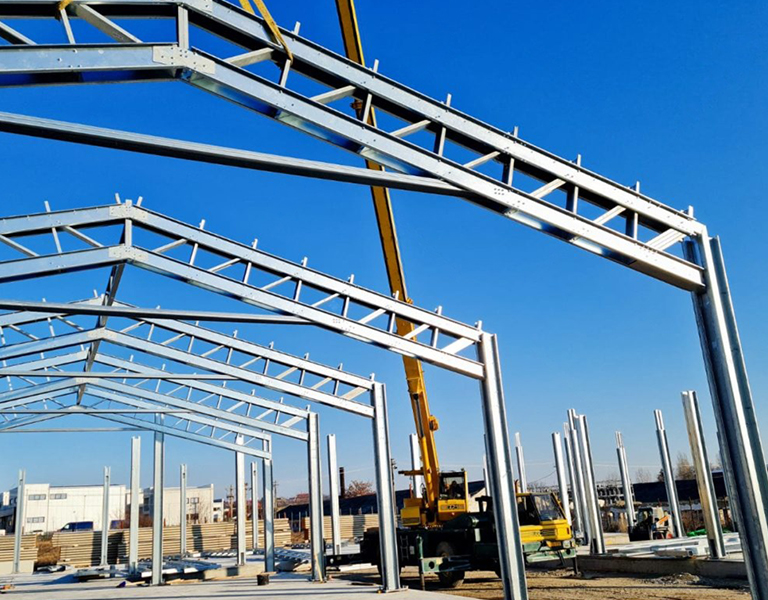
Galvanized light steel hangars represent a clear and practical solution for small to medium-scale projects, especially when fast execution, cost control, and ease of use are top priorities. With proper design and well-managed execution, this system becomes a reliable option that meets daily operational needs efficiently—an approach we consistently apply at HasanOğlu.
to watch video click here
This article does not discuss theoretical concepts or general structural definitions. Instead, it focuses directly on how this system is used in practice for hangar construction, and why it has proven to be a suitable solution for real operational projects, as implemented in Hassan Oğlu’s projects across Turkey.
How Is Galvanized Light Steel Used in Hangar Construction in Practice?
In practical terms, the process starts with defining the required hangar dimensions and its intended use. Based on this, light steel profiles are manufactured in the factory according to precise measurements. These components are delivered to the site ready for installation, significantly reducing time and minimizing complex on-site work.
On site, the structural frame is assembled efficiently. Columns, beams, and bracing elements are installed in an organized manner, without the need for extensive cutting or modifications. This method allows the hangar to be completed within a shorter timeframe compared to traditional construction systems.
The Impact of Lightweight Structures on Execution and Foundations
One of the most important practical advantages of galvanized light steel is its lightweight nature. This directly reduces foundation requirements and allows for simpler and faster footing works. In real terms, this means shorter concrete works duration and noticeable savings in overall project cost.
The reduced weight also makes transportation, lifting, and installation easier—especially on sites with limited space or projects where speed of execution is essential.
Cladding and Insulation: Making the Hangar Ready for Use
Once the structural frame is completed, the hangar is clad with materials suitable for its intended use, such as sandwich panels or insulated metal sheets. This cladding does more than provide a clean and organized appearance—it also protects the structure from weather conditions and offers thermal insulation that supports efficient daily operation.
Practically, this stage delivers a hangar that is ready for immediate use, without the need for additional complex finishing works.
Flexibility for Future Modifications and Expansion
Another key practical benefit of galvanized light steel hangars is flexibility. Future modifications can be carried out with ease—whether expanding the space, adjusting openings, or reorganizing the interior—without full dismantling or demolition. This flexibility is particularly valuable for operational projects where requirements may evolve over time.
Where Is This System Used in Real Applications?
Galvanized light steel is widely used in practical applications such as:
- Storage hangars
- Commercial warehouses
- Light workshops
- Temporary or semi-permanent operational buildings
In all these cases, the main objective is to achieve a hangar that is practical, quick to build, and capable of fulfilling its operational purpose efficiently.
HasanOğlu’s Practical Execution Experience
At HasanOğlu, every hangar project is approached from a purely practical perspective—starting with understanding the intended use, moving through precise manufacturing, and ending with efficient on-site installation. The primary focus is always on execution speed, installation accuracy, and ease of use once the hangar is handed over.
This practical approach is what makes our hangar projects real operational solutions, not just theoretical structures